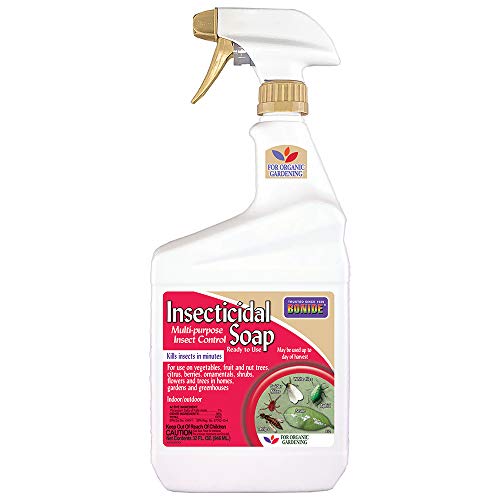
Insecticidal soap is the faster and simpler choice for an aphid or whitefly outbreak: it kills soft-bodied insects on contact and leaves no residual activity, so it is gentle on a crop and on anything that arrives afterwards. Neem acts more slowly, through anti-feedant and growth-regulating effects, and suits an ongoing problem rather than an emergency. Both are contact products, so coverage of the leaf undersides decides whether they work.
Soap mode of action
Contact, disrupts soft bodies
Neem mode of action
Anti-feedant and growth regulation
Residual activity
Soap none, neem short
Spray timing
Cool, out of direct sun
Researched from published specifications and verified owner reviews · Updated 2026-08-16
A greenhouse concentrates pests as effectively as it concentrates heat. There are no predators arriving on the wind, no rain knocking aphids off, and a generation cycle that runs faster in warmth. Whatever you spray, spraying is the last part of the answer rather than the first: exclusion, monitoring and biological control do more.
The comparison
Figure 1. Insecticidal soap against neem oil·8 rows
Figure 1. Insecticidal soap against neem oil
Measure
Insecticidal soap
Neem oil
Speed of effect
Immediate on contact
Days, cumulative
Residual activity
None once dry
Short
Works on aphid and whitefly
Yes, on contact
Yes, over repeat sprays
Works on mite
Partly
Partly
Needs leaf underside coverage
Absolutely
Absolutely
Phytotoxicity risk
Real on hot bright days
Real, higher on some crops
Effect on beneficials present
Kills those it contacts
Harmful to some, avoid on flowers
Repeat interval
Every few days while active
Weekly, per label
Follow the product label, which is the legally binding instruction. Researched general information rather than professional advice.
Coverage is the whole game
Both products only affect what the spray physically touches. Aphids and whitefly sit on the undersides of leaves and in growing tips, and a spray applied downward from above misses almost all of them. Use a sprayer that can be directed upward, work from underneath, and accept that treating a large tomato plant properly takes several minutes rather than a passing squirt.
Do not spray either onto a crop in direct sun, on a hot afternoon, or when the plants are already water stressed. Oil and soap on a hot leaf in bright light causes scorch, and a wilting plant is far more susceptible. Spray early morning or evening, when the house is cool and the leaves are turgid, and ventilate afterwards so the foliage dries.
Test on a few leaves first with any crop you have not sprayed before. Some plants, particularly those with fine hairs or a waxy bloom, react badly to oil sprays.
Do not spray open flowers, and check the label for the crop
Both products can harm pollinators and other beneficial insects that contact the spray. Avoid spraying open flowers, and if you are running biological control, spraying will damage it. Always read the label for the crops it is approved for and for any interval between spraying and harvest. The label is the legally binding instruction and it takes precedence over any general article.
What to do before spraying anything
Fine mesh over the vents excludes a great deal of what walks in. Ultra-Fine Garden Mesh Insect Netting, 10 x 50 ft over openings keeps cabbage white, leaf miner and much else out entirely, and costs less than a season of sprays. Yellow sticky traps tell you a population is rising while it is still small enough to squash by hand. And in a closed structure, biological control genuinely works, because the predators stay where you put them.
The decision, summarised
Aphid or whitefly outbreak, today: insecticidal soap, thorough coverage, repeated every few days.
A persistent low-level problem across a season: neem, on a weekly cycle per the label.
Fungus gnats: neither, dry the media surface and water from below.
Running biological control: neither, sprays undo the release.
Before any of the above: mesh the vents and hang sticky traps.
Sprays, and the things that reduce the need for them
Two products for when you need them, and the two cheaper measures that come first.
It has an effect, mostly through anti-feedant and growth-regulating action rather than a rapid kill, so it works across repeat applications rather than overnight. Whitefly in a warm greenhouse breeds fast enough that a single spray achieves little. If you need a quick reduction, insecticidal soap with genuinely thorough underside coverage acts faster, and yellow sticky traps take out a useful share of the adults.
+- Are these safe on edible crops?
Both are widely used on food crops, but the label for the specific product is what governs it, including which crops it is approved for and any interval between spraying and harvest. Read it before you buy rather than after. Being derived from a plant or from soap does not by itself make a product harmless to the crop, to you or to beneficial insects.
+- Why did the spray burn my leaves?
Usually because it was applied in direct sun, on a hot day, or to a plant that was already dry at the root. Oil and soap on a hot bright leaf causes scorch. Spray in the cool of morning or evening, make sure the plants are well watered first, ventilate so the foliage dries, and test on a few leaves before treating a whole crop you have not sprayed before.
+- What about spraying with washing-up liquid?
Household detergents are not formulated for plants, vary in composition, and cause leaf damage often enough that it is not a saving worth making. Insecticidal soap is a specific formulation of potassium salts of fatty acids tested for use on plants. Given a bottle costs less than a single tomato plant, use the right product.
Working out the figures for your own house and season? The Greenhouse Build & Growing Planner is the
paid version of these pages: 8 printable worksheets you fill in with your own
numbers, plus the full PDF, $29.