They do different jobs and a greenhouse generally needs both. An exhaust fan removes heat, runs on a thermostat and is sized from the volume. A circulation fan moves air within the house continuously at low speed, breaking up the still humid layer that sits on leaf surfaces and causes botrytis, downy mildew and damping-off. Circulation matters most in winter, when the house is sealed and extraction is the last thing you want.
Exhaust fan job
Remove heat
Circulation fan job
Break the boundary layer
When circulation matters most
Winter, house sealed
Seedling benefit
Air movement thickens stems
Researched from published specifications and verified owner reviews · Updated 2026-08-16
A leaf sitting in still air develops a thin layer of humid air against its surface. That layer is where fungal spores germinate, and it does not go away because the house was vented an hour ago. Moving air continuously across the crop disrupts it, which is why commercial glasshouses run horizontal airflow fans all winter.
Extraction does nothing about that layer in cold weather, because you cannot vent a house you are heating.
The comparison
Figure 1. Circulation fan against exhaust fan·7 rows
Figure 1. Circulation fan against exhaust fan
Measure
Circulation fan
Exhaust fan
Removes heat
No
Yes
Breaks the leaf boundary layer
Yes
Only while running
Runs in winter
Yes, continuously at low speed
No, it dumps heat
Power draw
Low
Higher
Sized by
Coverage of the growing area
Greenhouse volume
Effect on seedling stems
Thickens them
None directly
Typical cost
Low
Higher
Researched general information rather than professional advice.
Circulation on a bench, and in a house
For a tray of seedlings, a small clip fan is enough and does two useful things at once. An AC Infinity Cloudray S6 6 in Clip Fan ($49.99) on a low speed across a propagation tray suppresses damping-off and produces visibly sturdier stems, because seedlings respond to air movement by thickening. On a crowded shelf a pair of Roodike 5 in Clip-On Circulation Fans, 2-Pack ($35.99) costs very little and solves the same problem.
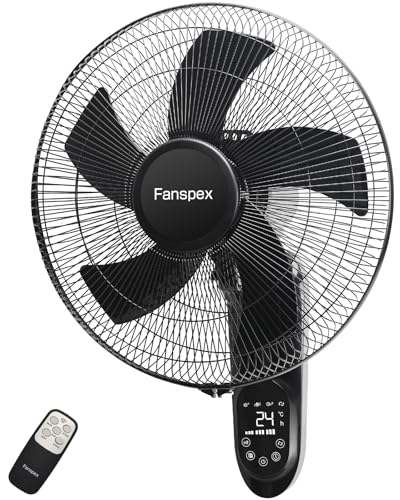
For a whole house, an oscillating wall fan such as a Fanspex 16 in Wall-Mounted Oscillating Fan ($61.39) keeps air moving along the length of the structure. Mount it high, aimed along the house rather than down at the crop, so the air circulates rather than blasting one bench.
Winter is when this matters
In summer the extract fan is running and air is moving anyway. In winter the house is sealed, the heater is on, humidity climbs every night as transpiration continues and the air cools, and every leaf develops condensation. That is the botrytis window, and it is exactly when a small continuously running circulation fan earns its cost. The specifics are in humidity and disease control.
Note
A short vent on a cold day is not wasteful
Venting for a few minutes in the middle of a cold day, when outside air is at its warmest and driest, exchanges humid air for dry air at a modest heat cost. Combined with a circulation fan and a heater on a controller, that short mid-day vent is the standard winter routine in a house with disease problems, and it works better than either measure on its own.
The decision, summarised
Summer overheating: exhaust fan, sized from the volume.
Winter botrytis, damping-off and mildew: circulation fan, running continuously.
A tray of seedlings going leggy and soft: a clip fan, which thickens stems as well.
A whole house in winter: an oscillating wall fan aimed along the length, not at the crop.
Both problems: both fans, on separate controls, because they run at opposite times of year.
Air movement at three scales
A single tray, a crowded shelf, a whole house, and the extraction that handles the other job.
Enough to see the leaves move gently, not enough to buffet them. A low speed setting on a small clip fan, running for much of the day, is usually right. Too much airflow dries trays out quickly and can desiccate very young seedlings, so start low and watch how fast the media dries as much as how the plants respond.
+- Should a circulation fan run all the time?
In winter, largely yes, at low speed, because the still humid air it disperses is present continuously. In summer the extract fan and open vents already move air, so continuous circulation is less critical. Power draw on a small fan is low enough that continuous running is inexpensive compared with the cost of losing a crop to botrytis.
+- Will a circulation fan cool the greenhouse?
No, and expecting it to is a common disappointment. Moving air around inside a closed house does not remove heat; it only redistributes it, and the fan motor adds a small amount. Cooling requires exchanging inside air for outside air, or shading so less heat arrives in the first place. Those are different measures with a different calculation behind them.
+- Where should a circulation fan be aimed?
Along the length of the house rather than directly at the crop, so the air circulates around the whole volume and returns. Mounting high and aiming down the aisle is the usual arrangement. Aiming a fan straight at a bench produces a dry spot and a wind-battered row of plants while the rest of the house stays still.
Working out the figures for your own house and season? The Greenhouse Build & Growing Planner is the
paid version of these pages: 8 printable worksheets you fill in with your own
numbers, plus the full PDF, $29.