Skip to content
GreenhouseSetup
Menu

Peat pellets versus coir pellets

The short answer

Coir pellets are the better default now: they rewet easily after drying out, they are peat free, and many arrive with a starter charge of nutrient. Peat pellets hold water more consistently through germination and are slightly acidic, which suits some crops, but peat extraction damages carbon-rich bog habitat and a dried-out peat pellet is very hard to rewet.

Peat pellet size
Commonly 36 mm expanded
Coir pellet size
Commonly 35 mm expanded
Rewetting after drying
Coir easy, peat difficult
Typical pH
Peat acidic, coir near neutral

Researched from published specifications and verified owner reviews · Updated 2026-08-16

A pellet is a compressed disc of media in a fine mesh that expands into a plug when soaked. The point of both is the same: a seedling can be planted without ever being pulled out of anything, which matters for crops that sulk after root disturbance such as cucumbers, squash and beans.

The choice between them is partly horticultural and partly about where the material comes from.

The comparison

Figure 1. Peat pellets against coir pellets · 8 rows
Figure 1. Peat pellets against coir pellets
MeasurePeat pelletsCoir pellets
Source material Harvested peat bog Coconut husk, a by-product
pH Acidic, often limed by the maker Close to neutral
Water holding High and even High
Rewetting once dry Difficult, water runs off Easy
Starter nutrient included Usually not Often, check the label
Mesh around the plug Usually present Usually present
Environmental cost Significant, peatland carbon Low, uses a waste stream
Salt content on arrival Low Can be high if poorly washed
Researched general information rather than professional advice.

The rewetting problem is the practical one

Peat is hydrophobic when it dries. A tray of Jiffy 36 mm Peat Pellets, 100 Count ($11.95) left one warm afternoon too long will shed water off the surface rather than absorb it, and getting it back takes standing the whole tray in water for a long soak. Coir does not do this to anything like the same degree, which in a bright spring greenhouse is worth more than any small difference in water holding capacity.

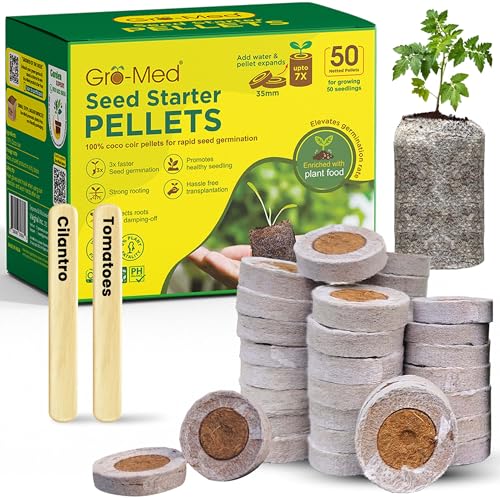
Gro-Med Organic Coco Coir Seed Starter Pellets, 35 mm, 50-Pack rewet readily and arrive with nutrient already in the plug, which covers the first fortnight before you need to start feeding. Check the label though, because a plug already carrying fertiliser is not what you want under very small or slow seed.

The mesh

Most pellets of both kinds are held in a fine mesh net. That net is what stops the plug falling apart, and it is also the thing to look at before planting out. Nets vary from readily degradable to stubbornly persistent, and a root passing through a mesh that does not break down is a genuine constriction. Either buy a product that states the net degrades, or slit the net with a fingernail as you plant.

Where a pellet is the wrong choice

Pellets are small. A tomato that needs to hold in the propagation house for six weeks will outgrow one long before planting out, and potting on from a pellet into a larger pot is no easier than potting on from a cell. For crops with a long transplant period, a soil block or a deeper cell serves better. Pellets are at their best for crops that go from sowing to planting quickly and hate being disturbed.

Note

Coir salts are worth one check

Coir is washed before sale, but the quality of that washing varies, and poorly washed coir carries sodium and potassium that can suppress germination. If a batch germinates badly for no obvious reason, soak a few plugs in clean water, discard the water, and try again with the rinsed plugs before blaming the seed.

The decision, summarised

  • Cucurbits, beans, sweetcorn and anything that resents disturbance: either, and a pellet beats a cell for all of them.
  • Peat-free by preference or policy: coir, without any horticultural sacrifice worth naming.
  • A greenhouse you cannot check daily in spring: coir, because a dried peat pellet is very hard to bring back.
  • Very fine seed, or crops sensitive to salt: a fine seed-starting mix in a cell rather than a nutrient-charged pellet.
  • Long holding period before planting out: a soil block or a deeper cell, not a 35 mm pellet.

Pellets and the mixes that replace them

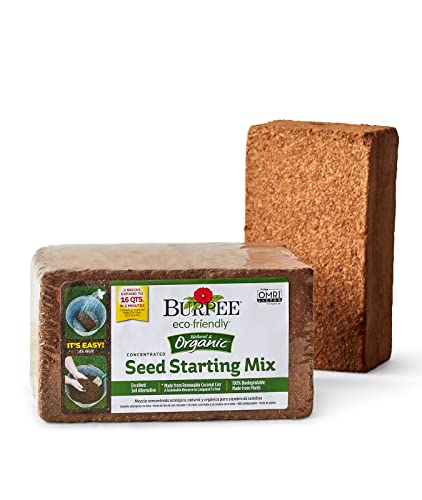
Two pellet options, and the loose media worth having when a pellet is too small for the crop.

Related on this site

Common questions

4 answers

+ Do you remove the netting from peat or coir pellets before planting?

Check the product first. Some nets are designed to break down in soil and some are not, and a persistent net can constrict roots as the plant grows. The safe habit is to slit the net down one side with a fingernail as you plant, or peel it off entirely if the plug holds together. It takes a second and removes the question.

+ Is coir as good as peat for seed starting?

For most seed-starting purposes yes, and it has the practical advantage of rewetting easily after it dries. The differences worth knowing are pH, since peat is acidic and coir is closer to neutral, and salt content, since poorly washed coir can carry enough sodium and potassium to affect germination. Buy from a source that washes its coir properly and the difference stops mattering.

+ Why do my pellets grow mould on the surface?

A white fuzzy growth on the surface is usually a harmless saprophytic fungus feeding on organic matter, and it appears when the surface stays wet with no air moving. It is a warning rather than a disease: the same conditions favour damping-off, which does kill seedlings. Water from below so the surface dries, move air across the tray with a small clip fan, and vent the dome.

+ Can pellets be reused?

Not usefully. Once a plug has grown a plant it is depleted, compacted and carrying whatever root pathogens were in the tray. Break spent plugs into the compost heap rather than resowing them. The trays and domes are the reusable part, and washing those between seasons matters more than anything you could recover from an old plug.

Working out the figures for your own house and season? The Greenhouse Build & Growing Planner is the paid version of these pages: 8 printable worksheets you fill in with your own numbers, plus the full PDF, $29.