Calculator
What your roof collects and what to store it in
The arithmetic
One inch of rain falling on one square foot of surface delivers 0.623 US gallons. That figure comes straight from the geometry: a square foot is 144 square inches, one inch deep is 144 cubic inches, and there are 231 cubic inches in a US gallon.
Real collection is lower than the theoretical figure. Some water is lost to wetting the roof surface at the start of a shower, some overshoots the gutter in heavy rain, some evaporates, and gutters do not capture everything at the edges. A realistic efficiency for a well-fitted greenhouse gutter is around 85 percent, which is the figure used here.
The catchment area is the roof plan area rather than the sloped surface area, which is a point people get wrong in the helpful direction. Rain falls vertically, so what matters is the horizontal projection of the roof. A 10 by 18 foot greenhouse has 180 square feet of catchment regardless of the roof pitch.
Putting it together, that 180 square foot house collects roughly 95 gallons from one inch of rain after losses. In a climate receiving 30 inches a year, the annual yield is on the order of 2,800 gallons, which is far more than the house consumes and makes storage rather than catchment the limiting factor.
Why rainwater matters under cover specifically
The case for rainwater in a greenhouse is stronger than the case for it in a garden, and the reason is not cost.
Outdoors, rainfall passes through the soil profile continuously and carries dissolved salts downward and away. This leaching is constant and invisible, and it is why garden soil does not accumulate the residue of years of irrigation.
Under cover, nothing ever leaches. Every mineral dissolved in irrigation water stays behind when that water is taken up by a plant or evaporates from the surface. In a hard water area, carbonates progressively raise pH and sodium and other salts accumulate, until a bed that tests as adequately fed produces poor growth, marginal leaf scorch and a white crust on the surface.
Rainwater is soft and close to neutral, so it does not contribute to this at all, and irrigating with it periodically also helps leach out what hard water has already deposited. For growers in hard water areas this is the strongest single argument for rainwater capture, well ahead of the cost saving.
There is a secondary benefit for misting and evaporative cooling equipment. Nozzle orifices are measured in tenths of a millimetre and scale up rapidly on hard water, and evaporative cooling media scales in the same way. Soft water substantially extends the service life of both.
Sizing the storage
Two different questions produce two different answers, and confusing them leads to buying either far too little storage or far too much.
Buffering a supplement. If mains water is available and rainwater is the preferred rather than the only source, storage only needs to hold a useful working quantity. Three to five days of peak demand is ample, which for a typical hobby greenhouse is 20 to 40 gallons. A single barrel covers this and it will refill many times over a season.
Full autonomy. If rainwater is the only source, storage must bridge the longest dry spell in the growing season, which in many climates is several weeks at exactly the time demand is highest. A 36 square foot house using 6 gallons a day through a three week dry spell needs 126 gallons of storage with nothing arriving, and that is a modest example. Full autonomy typically means several hundred gallons.
For most hobby growers the honest answer is the first: use rainwater preferentially, keep mains as backup, and size storage for convenience rather than independence. Multiple linked barrels are also easier to site than one large tank and can be added incrementally.
Setting up the collection
Four components make a working system and each addresses a specific failure.
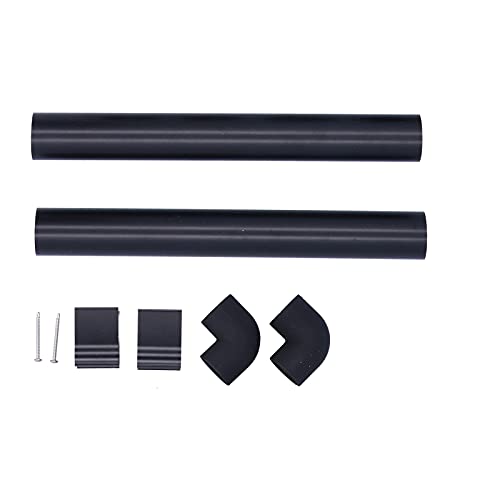
Gutters. Most hobby greenhouses ship with either nothing or a token gutter. A proper greenhouse gutter kit sized to the eave length is what actually captures the water. Fall matters: a gutter needs a consistent slope toward the outlet, and a level gutter holds standing water that goes stagnant and breeds mosquitoes.
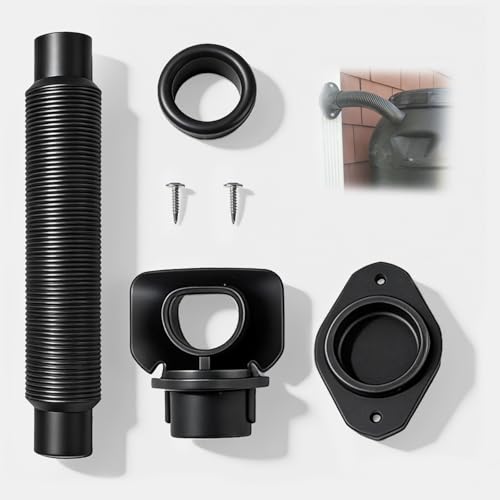
A diverter with a first-flush arrangement. A downspout diverter routes water into the barrel and sends the overflow away once full, which prevents the barrel backing up into the gutter. First-flush diversion, which discards the first portion of a shower, matters because that first portion carries the dust, pollen and debris washed off the roof and is by far the dirtiest water of the event.
The barrel itself, which should be opaque rather than translucent. Light passing into stored water grows algae, and an algae bloom in a barrel blocks filters and emitters and smells. A proper rain barrel is opaque, has a sealed lid and a screened inlet, which also keeps out mosquitoes and debris.
A filter before any irrigation. Rainwater carries particulate, and drip emitters block on it directly. A filter at the head of the irrigation system is essential on any rainwater-fed installation and needs cleaning monthly in season.
Overflow, freezing and other practicalities
Three things that catch people out after the system is installed.
Overflow has to go somewhere sensible. A barrel fills in a single decent shower and then overflows for the rest of the event. If the overflow discharges against the greenhouse base or a house foundation, the system has created a drainage problem. Pipe it away deliberately, or link barrels so the overflow from one fills the next.
Freezing splits containers. Water expands as it freezes and a full barrel in a hard frost can crack. In cold climates, drain barrels before winter or leave them substantially empty. This conflicts with using barrels as thermal mass inside the greenhouse, which is resolved by keeping the interior barrels full and the exterior collection barrel drained, since the interior of a heated house does not freeze.
Stored water goes stale. Water standing for months in a warm barrel develops biological growth even in an opaque container. Using the store regularly rather than treating it as a reserve keeps it turning over, and cleaning barrels out annually is worth the effort.
On the question of whether rainwater from a roof is suitable for edible crops: rainwater collected from a greenhouse glazing surface is generally used for irrigation without issue, and applying it to the soil rather than to foliage and edible parts is the sensible practice. Local guidance varies and this is researched general information rather than a food safety determination, so check your own local extension guidance if the crop is eaten raw.