Winter greenhouse temperature has two problems: not enough heat, and losing what heat there is. Insulation addresses the second. Thermal mass addresses neither directly and instead moves heat in time, taking the surplus that would have been vented away at midday and returning it at three in the morning.
That distinction matters because it decides where each belongs.
The comparison
| Measure | Bubble insulation | Thermal mass |
|---|---|---|
| What it does | Slows heat loss | Stores and releases heat |
| Cost in light | Real, every layer | None |
| Cost in space | None | Floor area and weight |
| Effect on daytime peak | Raises it | Lowers it |
| Effect on the overnight minimum | Raises it | Raises it |
| Cost to install | Low | Low to moderate |
| Seasonal | Fitted for winter, removed in spring | Permanent |
| Best placed | North wall, knee walls, bench fronts | In direct sun, dark coloured |
Insulate what is not earning its light
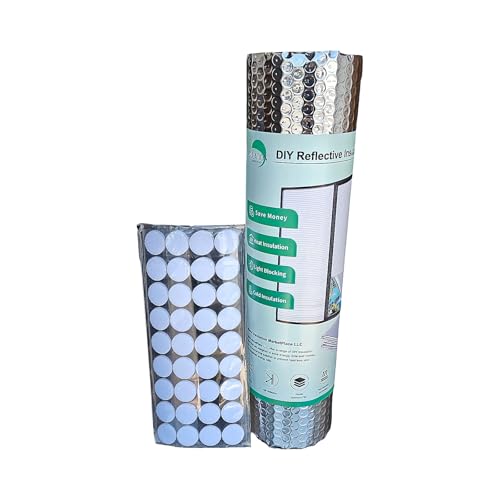
The north wall of a greenhouse in the northern hemisphere contributes very little direct light and loses heat at the same rate as every other pane. Lining it with FONUNO Reflective Bubble Insulation Roll, 23.6 in x 10 ft ($11.69) costs almost nothing in useful light and cuts a meaningful share of the loss. The same argument applies to knee walls below bench height, where light passes under the bench and does nothing.
A narrower roll such as Reflective Double-Bubble Insulation Roll, 16 in x 10 ft ($9.95) suits exactly those strips: bench fronts and the band of glazing below staging.
What is much less obviously worthwhile is lining the whole house. It works thermally and it dims the interior at the darkest time of year, and a crop short of light is not helped by being a degree warmer.
Mass has to see the sun
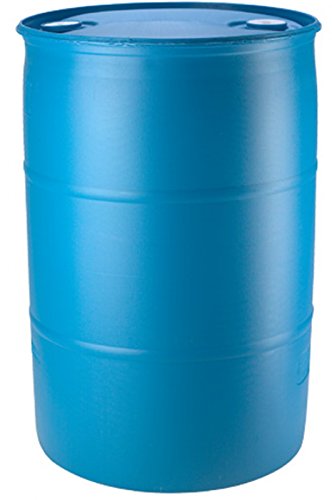
A 55 Gallon Sealed Water Storage Barrel ($129.00) against a north wall, painted dark and sitting where midday sun falls on it, absorbs heat all day and releases it through the night. Water holds far more heat per litre than stone, brick or concrete, which is why barrels are the standard approach in hobby houses.
Mass placed in shade does nothing useful. Mass placed where it blocks light from a crop is a net loss. The right position is the surface the sun already lands on and that you were not growing on anyway, which in most houses is the north wall and the floor beneath the staging.
Do these in order
Seal air leaks first, because a draught defeats both. Then insulate the surfaces that are not doing light work. Then add mass. Only then size a heater, because every step above reduces the output you need to buy and run. The glazing heat loss calculator shows how much each change is worth before you spend anything.
The decision, summarised
- North wall and knee walls: insulate, and lose almost nothing in light.
- South-facing glazing in winter: leave it clear, light is the scarcer resource.
- Wide day to night temperature swing: thermal mass, in the sun.
- Heating bill too high: seal, insulate, add mass, then resize the heater.
- Unheated house aiming to stay frost free: both, plus an inner row cover over the crop at night.