Cucumbers are the fastest fruiting crop a greenhouse will grow, going from sown seed to first fruit in as little as 50 days, and they are the crop where variety choice matters more than any cultural technique. Getting the variety right removes three of the most common greenhouse cucumber problems before you plant.
They are also thirsty, heat-loving and short-lived. A greenhouse cucumber plant produces heavily for perhaps ten weeks and then declines, which means a successful season usually involves two sowings rather than one. Planning for that from the start is more productive than trying to nurse a tired plant through the second half of summer.
| Measure | Figure | Why it matters |
|---|---|---|
| Germination soil temperature | 85 to 95 degF | The warmest requirement of any common vegetable. At 60 degF germination takes 13 days and is unreliable. |
| Days to emergence | 3 days | At the optimum soil temperature, in a moist starting medium. |
| Optimum day temperature | 72 to 85 degF | Where growth is fastest. Above the range, specific processes start failing. |
| Optimum night temperature | 65 to 70 degF | The day to night difference controls stem elongation and plant habit. |
| Survives down to | 35 degF | Brief exposure on an acclimated plant, not a sustained figure. |
| Trouble above | 95 degF | Bitter and misshapen fruit, driven by heat combined with uneven water uptake. |
| Target daily light integral | 20 to 30 mol/m2/day | Moles per square meter per day. Below this the crop holds rather than grows. |
| PPFD needed at 16 hours | 347 to 521 umol/m2/s | What a fixture must deliver at the canopy to reach that daily total. |
| Spacing under cover | 12 to 16 in in rows 36 in apart, trained vertically | Wider than outdoor spacing, because still air makes disease the limit. |
| Floor area per plant | 3 to 4 sq ft | Includes each plant share of shoulder and path space. |
| Sowing depth | 0.5 to 1 in | Large seed, sown on edge so water does not sit in the seed coat and rot it. |
| Soil pH | 6.0 to 7.0 | Outside this band, nutrient availability rather than nutrient supply becomes the limit. |
| Days to first harvest | 50 to 65 days from sowing | From sowing, under cover, at good light. Winter timings run considerably longer. |
| Humidity preference | 0.6 to 1.0 kPa VPD | Expressed as vapor pressure deficit, which accounts for temperature as relative humidity does not. |
How do you start cucumbers under cover?
Sow at 85 to 90 degrees Fahrenheit in the media, where germination takes about three days. Cucumbers dislike root disturbance more than most vegetables, so sow into the container they will grow in or into peat plugs that transplant whole. A checked cucumber seedling often never recovers its vigor.
Sow the large flat seed on edge rather than flat. Lying flat, water pools in the seed coat and rot is common; on edge it drains. This is a small detail with a measurable effect on emergence rate.
Sow two batches, three to four weeks apart. The first plant will be producing heavily by the time the second is ready to climb, and when the first declines the second takes over without a gap. A single sowing gives a glut followed by nothing, which is the common experience.
What temperature does cucumbers need in a greenhouse?
Cucumbers want 72 to 85 degrees Fahrenheit by day and 65 to 70 at night, which is the warmest night requirement of the common greenhouse vegetables. Below 60 degrees at night growth slows sharply and the plant becomes susceptible to root problems; below 50 it is often permanently checked even without frost.
They also want higher humidity than tomatoes, a vapor pressure deficit around 0.6 to 1.0 kPa rather than 0.8 to 1.2. In practice this means cucumbers do well in the dampest corner of a house and tomatoes in the best-ventilated one, and growing them together is a compromise both accept rather than an arrangement that suits either.
In high summer the combination of heat and irregular water produces bitter fruit, which is the classic greenhouse cucumber complaint. The bitterness is cucurbitacin, produced under stress, and it concentrates at the stem end and in the skin. Prevention is entirely about consistency: shade the house with shade cloth and put the crop on a timer.
How much light does cucumbers need?
Cucumbers want 20 to 30 moles per square meter per day, the same demanding range as peppers, and they show light shortage as long internodes and pale fruit that aborts at finger length. Because they grow so fast, a cucumber responds to a light change within days rather than weeks, which makes them a useful indicator plant for the whole house.
They are not a winter crop under any realistic hobby lighting. Where light does help is the same place it helps peppers: raising a strong transplant in late winter so the plant is ready to run the moment the house is warm enough.
Vertical training has a light benefit as well as a space one. A sprawling cucumber shades its own lower leaves completely, whereas a vertically trained plant presents nearly all its leaf area to the light, which is a substantial part of why trained plants out-yield sprawling ones by so much.
Spacing, support and training
Space at 12 to 16 inches in rows 36 inches apart when trained vertically, giving 3 to 4 square feet per plant. Left to sprawl on the floor a single plant will cover 15 to 20 square feet and produce less, so vertical training is close to mandatory in a hobby house.
Train on a single leader up a string or a net, exactly as with tomatoes. Use polypropylene twine from an overhead wire, wind the growing tip around it rather than clipping every joint, and pinch out all side shoots below about 24 inches so the base of the plant stays open.
Above 24 inches, let side shoots run but stop each at two leaves beyond a fruit. This is the classic greenhouse cucumber pruning system and it balances fruit against foliage. Left entirely unpruned the plant makes a dense mass that fruits poorly and holds humidity; pruned too hard it runs out of leaf area to support the fruit.
When the leader reaches the ridge, stop it there. The plant will then put its energy into the side shoots below rather than into more stem, which is what you want at that point in the season.
Watering and feeding
Cucumbers use roughly 0.35 gallons per square foot per day at peak, close to tomato demand on a smaller plant, and they wilt visibly within hours of running short. Unlike tomatoes, which tolerate a degree of drying, cucumbers punish it immediately with bitter fruit and aborted flowers.
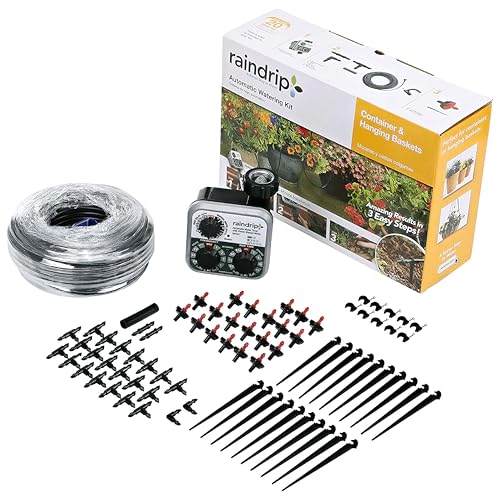
Consistency is worth more than volume. A drip kit with a timer running twice a day in hot weather beats one long soak, because the medium never swings between saturated and dry. In a bed rather than containers, a soaker hose works better than emitters because cucumber roots run wide and shallow.
Feed heavily. Cucumbers are among the hungriest greenhouse crops and a well-fed plant carries fruit that a hungry one aborts. Balanced feed while climbing, then higher potassium once fruiting, at roughly weekly intervals in a container and fortnightly in a bed.
Never water the foliage in the evening. Cucumber leaves are large, flat and slow to dry, and downy mildew and powdery mildew both establish on leaf surfaces that stay wet overnight.
What goes wrong with greenhouse cucumbers?
| What you see | Usual cause | What to do |
|---|---|---|
| Bitter fruit, worst at the stem end | Cucurbitacin produced under stress, from heat combined with irregular watering | Shade the house and put the crop on a timer. Peel from the flower end toward the stem to reduce what is already there. |
| Fruit on a seedless variety is fat, seedy and bitter | Accidental pollination of a parthenocarpic variety, usually by a nearby seeded type | Grow only all-female parthenocarpic types under cover, or exclude pollinators from the house entirely. |
| Small fruit yellows and drops at finger length | Insufficient light or nutrition to carry the load, or too many fruit set at once | Feed more, thin fruit to one per node on side shoots, and check the daily light integral against the target. |
| White powdery patches on upper leaf surfaces | Powdery mildew, which unlike most fungal disease prefers dry air and does not need leaf wetness | Improve airflow and spacing, remove affected leaves early, and choose resistant varieties from the start. |
| Angular yellow patches bounded by leaf veins | Downy mildew, which does need leaf wetness and high humidity | Stop evening watering, vent on mild afternoons, and run a circulation fan continuously. |
| Plant collapses suddenly with a soft brown stem base | Root or stem rot, usually from overwatering in cool conditions or from a buried stem | Never bury a cucumber stem. Improve drainage and do not water a cold house on a cold day. |
| Stippled bronzed leaves with fine webbing | Spider mite, which favors the hot dry conditions cucumbers are often grown in | Raise humidity, damp down the floor, and introduce predatory mites early rather than after the webbing appears. |
| Plant stops producing after about ten weeks | Normal decline, not a fault | Plan a second sowing three to four weeks after the first so the replacement is climbing as the first declines. |
Which types work best under cover?
| Type | Suits | What to know |
|---|---|---|
| All-female parthenocarpic long types | Greenhouse growing, first choice | Set fruit without pollination and produce no seed, which removes bitterness from accidental pollination entirely. The standard commercial greenhouse cucumber. |
| Parthenocarpic mini and snack types | Small houses and containers | Same no-pollination advantage in a smaller plant with a heavier set of small fruit, and the fastest to first pick. |
| Beit Alpha types | Flavor and thin skin | Short, thin-skinned and usually parthenocarpic. Excellent under cover and does not need peeling. |
| Standard seeded slicing types | Outdoor growing | Need pollination, which a closed greenhouse does not provide, so they set poorly under cover unless hand pollinated. |
| Pickling types | Preserving | Mostly seeded and mostly outdoor types, though some parthenocarpic pickling varieties exist and work well under cover. |
| Grafted plants | Beds with a history of wilt | Grafting onto vigorous rootstock addresses soilborne wilt, which builds up in a permanent greenhouse bed where nothing is rotated. |
The variety decision is the most consequential one on this page. A parthenocarpic all-female type sets every flower without pollination, produces no seed and therefore no bitterness from crossing, and yields far more per plant under cover than a seeded type does. A seeded type in a closed greenhouse needs hand pollination on every flower, which nobody sustains for a whole season.
The one rule that follows: do not grow a seeded cucumber and a parthenocarpic one in the same house. If a bee reaches the parthenocarpic plant carrying pollen from the seeded one, the resulting fruit is fat, seedy and bitter. This is the single most common cause of a disappointing greenhouse cucumber crop and it is entirely avoidable.
Harvesting and what comes next
Pick young and pick often. A cucumber left to size fully suppresses further set on the whole plant, and picking every two days at peak roughly doubles total yield against picking weekly. This is the crop where harvest frequency has the largest effect on total output.
Cut with a knife or snips rather than pulling, because a pulled fruit takes the stem with it and opens a wound on the main stem that rots. Leave a short stub of stalk on the fruit, which also keeps it in better condition.
Fruit keeps about a week in a cool place and does not like refrigeration below about 50 degrees Fahrenheit, where it develops sunken pitting. A cool room is better than a cold fridge.
Equipment for growing cucumbers under cover



Check the spacing arithmetic in the plant spacing chart, the humidity target in the VPD chart, and the pollination question in pollination in a greenhouse.