Vapor pressure deficit, not relative humidity, is the number that describes how hard the air is pulling water from a leaf. Seventy percent relative humidity at 60 degrees Fahrenheit is a VPD of 0.53 kPa, while the same 70 percent at 85 degrees is 1.23 kPa, more than twice the drying pressure. The general greenhouse target is 0.8 to 1.2 kPa for established plants and 0.4 to 0.8 for propagation.
Established plants
0.8 to 1.2 kPa
Propagation
0.4 to 0.8 kPa
Disease risk above
85 percent RH
Rows charted
48 combinations
Researched from published specifications and verified owner reviews · Updated 2026-08-16
Relative humidity is a percentage of saturation, and saturation depends on temperature, which is why relative humidity on its own is a misleading number in a greenhouse. Warm air holds far more water than cool air, so the same relative humidity figure describes completely different growing conditions at different temperatures.
Vapor pressure deficit fixes this. VPD is the difference between the water vapor the air is holding and the maximum it could hold at that temperature, measured in kilopascals. It is a direct measure of how hard the air is pulling water out of a leaf, which is what actually matters to the plant, and it is what commercial growers control.
VPDSVP x (1 - RH)
Saturation vapor pressure at the air temperature, multiplied by one minus the relative humidity as a fraction. The result is in kilopascals. Higher VPD means drier air and more transpiration pull; lower VPD means the air is closer to saturation.
Figure 1. Vapor pressure deficit in kPa by temperature and relative humidity·10 rows
Figure 1. Vapor pressure deficit in kPa by temperature and relative humidity
Air temperature
50% RH
60% RH
70% RH
80% RH
90% RH
50 degF
0.61
0.49
0.37
0.25
0.12
55 degF
0.74
0.59
0.44
0.30
0.15
60 degF
0.88
0.71
0.53
0.35
0.18
65 degF
1.05
0.84
0.63
0.42
0.21
70 degF
1.25
1.00
0.75
0.50
0.25
75 degF
1.48
1.19
0.89
0.59
0.30
80 degF
1.75
1.40
1.05
0.70
0.35
85 degF
2.05
1.64
1.23
0.82
0.41
90 degF
2.41
1.93
1.44
0.96
0.48
95 degF
2.81
2.25
1.69
1.12
0.56
Values under 0.4 kPa are propagation conditions and are dangerous for established plants. Values from 0.8 to 1.2 are the general target. Values above 1.6 cause stomatal closure, which stops photosynthesis. Note how the same relative humidity moves through three different management categories as temperature rises.
What the numbers mean in practice
Below 0.4 kPa: the air is close to saturation and transpiration nearly stops. Correct for unrooted cuttings, which cannot replace water they lose. Dangerous for anything established, because a plant that cannot transpire cannot move calcium, and condensation on leaves invites botrytis.
0.4 to 0.8 kPa: the propagation and seedling range. Enough transpiration to move nutrients, little enough that a small root system can keep up.
0.8 to 1.2 kPa: the general target for established crops. Fast transpiration, fast growth, manageable water demand.
1.2 to 1.6 kPa: high but workable for mature fruiting crops with good root systems and reliable irrigation. Water demand is high and any interruption shows quickly.
Above 1.6 kPa: stomata begin closing to conserve water, which stops photosynthesis. The plant wilts even with wet roots because transport cannot match demand. This is the midday summer greenhouse condition.
Note
The morning is the dangerous time, not the afternoon
The highest disease risk in a greenhouse is the hour around dawn, when air temperature is at its minimum and relative humidity is therefore at its maximum. If the air reaches its dew point, water condenses on every surface including leaves, and a wet leaf for several hours is what botrytis and downy mildew need. A brief warm-up and vent at dawn is worth more for disease control than anything you do at midday.
Dew point: the number that predicts condensation
Dew point is the temperature at which the air currently in your greenhouse becomes saturated. If any surface in the house falls to the dew point, water condenses on it. Glazing is always the coldest surface, which is why condensation appears there first and why it drips on the plants below.
Figure 2. Dew point in degrees F. Any surface below this figure will run with water·5 rows
Figure 2. Dew point in degrees F. Any surface below this figure will run with water
Air temperature
50% RH
60% RH
70% RH
80% RH
90% RH
50 degF
32 degF
37 degF
41 degF
44 degF
47 degF
60 degF
41 degF
46 degF
50 degF
54 degF
57 degF
70 degF
51 degF
55 degF
60 degF
64 degF
67 degF
80 degF
60 degF
65 degF
69 degF
73 degF
77 degF
90 degF
69 degF
74 degF
79 degF
83 degF
87 degF
Glazing is always the coldest surface in a greenhouse, so it reaches the dew point first. On a cold night with single-wall glazing, the glazing sits close to outside temperature, which makes condensation inevitable rather than optional.
Read the table for the practical rule. If the air is at 70 degrees Fahrenheit and 80 percent relative humidity, the dew point is about 64 degrees, so any glazing surface below 64 will run with water. On a night when it is 30 degrees outside, single-wall glazing sits very close to outside temperature, so condensation is inevitable and the question is only whether it drips onto the crop or runs down a channel.
Managing humidity without a dehumidifier
The instinct is to buy a dehumidifier, and in a leaky glazed structure that is usually the wrong purchase: it is trying to dry the outdoors. Three cheaper measures do more.
Vent warm, not cold. Exchanging air late on a mild afternoon removes moisture-laden air and replaces it with drier air that then warms. Venting at dawn when it is coldest exchanges very little water, because cold air holds almost none.
Move air continuously. A small circulation fan running at low speed breaks up the saturated boundary layer sitting on each leaf, which is where the disease risk actually is, even when room humidity is unchanged.
Water in the morning, at the roots. Water applied in the evening sits on the surface all night. A drip line keeps foliage dry entirely, which removes most leaf wetness at source.
Where the problem inverts, in a hot dry summer or on a propagation bench, adding humidity is worth doing deliberately rather than by damping the floor. A pressure-pump misting system atomizes finely enough to evaporate before it lands, which raises humidity and lowers temperature. A hose-pressure mister produces droplets instead, which land on leaves and cause the exact rot problem you are trying to avoid.
Measuring and managing humidity
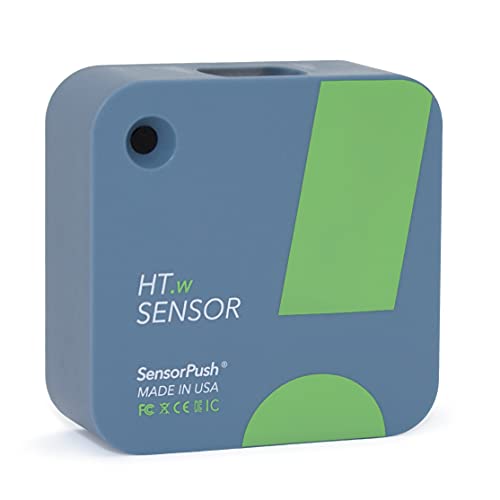
You cannot manage VPD without measuring temperature and humidity together, and the cheap combined meters are adequate for that. Control is a separate purchase.
Zero point eight to 1.2 kilopascals for established plants, and 0.4 to 0.8 for propagation and unrooted cuttings. Below 0.4 transpiration nearly stops, which prevents calcium movement and invites botrytis. Above about 1.6 stomata begin closing to conserve water, which stops photosynthesis entirely and causes wilting even when the roots are wet.
+- Why is relative humidity a poor measure in a greenhouse?
Because it is a percentage of saturation and saturation depends on temperature. Seventy percent relative humidity at 60 degrees Fahrenheit is a vapor pressure deficit of 0.53 kPa, while 70 percent at 85 degrees is 1.23 kPa, more than twice the drying pressure on the leaf. A single relative humidity target therefore describes very different conditions across the day.
+- What humidity is too high for a greenhouse?
Sustained relative humidity above about 85 percent is where fungal disease pressure becomes serious, and the risk is highest around dawn when temperature is at its minimum. The specific danger is leaf wetness: if any surface falls to the dew point, water condenses on it, and a leaf wet for several hours is what botrytis, downy mildew and bacterial diseases require.
+- How do I lower humidity in a greenhouse?
Vent on a mild afternoon rather than a cold morning, because warm air carries away far more water than cold air can. Run a small circulation fan continuously to break up the saturated layer on leaf surfaces. Water at the roots in the morning rather than overhead in the evening. A dehumidifier in a leaky glazed structure is usually the least effective of the four.
+- Why does my greenhouse drip on the plants?
Because the glazing has fallen below the dew point of the air inside. Glazing is always the coldest surface in the house, so condensation forms there first and then drips. Twin-wall polycarbonate is much less prone to this than single glazing because its inner surface stays warmer, and anti-condensate glazing films or a channel that catches and diverts the run-off address it on single glazing.
+- Should I raise humidity in a greenhouse in summer?
Sometimes, yes. In dry summer air a greenhouse can exceed 2 kPa of vapor pressure deficit, at which point stomata close and growth stops. Fine misting that evaporates before it lands both raises humidity and lowers temperature by evaporative cooling. The key word is fine: a mister producing droplets rather than fog wets leaves and causes the disease problem you are trying to avoid.
Working out the figures for your own house and season? The Greenhouse Build & Growing Planner is the
paid version of these pages: 8 printable worksheets you fill in with your own
numbers, plus the full PDF, $29.