Kale is the most cold-tolerant crop most growers will put in a greenhouse, and that raises an honest question about whether it belongs there. It survives outdoors in conditions that would finish nearly everything else, so a greenhouse is not what keeps it alive.
What a greenhouse does give kale is protection from wind, from rain-splashed soil, and from the worst of the pest pressure that outdoor brassicas face from caterpillars and pigeons. It also lets you harvest in comfort through the wettest months. Against that, a closed structure creates its own aphid and whitefly problem, and kale is a magnet for both.
| Measure | Figure | Why it matters |
|---|---|---|
| Germination soil temperature | 65 to 75 degF | Kale germinates fast and reliably across a wide band, and is one of the easiest brassicas to raise. |
| Days to emergence | 4 to 7 days | At the optimum soil temperature, in a moist starting medium. |
| Optimum day temperature | 55 to 70 degF | Where growth is fastest. Above the range, specific processes start failing. |
| Optimum night temperature | 40 to 55 degF | The day to night difference controls stem elongation and plant habit. |
| Survives down to | 10 degF | Brief exposure on an acclimated plant, not a sustained figure. |
| Trouble above | 80 degF | Growth becomes coarse and bitter, and aphid populations accelerate sharply in sustained warmth. |
| Target daily light integral | 12 to 17 mol/m2/day | Moles per square meter per day. Below this the crop holds rather than grows. |
| PPFD needed at 16 hours | 208 to 295 umol/m2/s | What a fixture must deliver at the canopy to reach that daily total. |
| Spacing under cover | 12 to 18 in each way for full plants, 3 to 4 in for baby leaf | Wider than outdoor spacing, because still air makes disease the limit. |
| Floor area per plant | 1 to 2 sq ft | Includes each plant share of shoulder and path space. |
| Sowing depth | 0.25 to 0.5 in | Standard brassica depth. Kale seed is robust and emerges reliably from shallow burial. |
| Soil pH | 6.0 to 7.5 | Outside this band, nutrient availability rather than nutrient supply becomes the limit. |
| Days to first harvest | 50 to 65 days for full leaves, 25 to 30 for baby leaf | From sowing, under cover, at good light. Winter timings run considerably longer. |
| Humidity preference | 0.8 to 1.2 kPa VPD | Expressed as vapor pressure deficit, which accounts for temperature as relative humidity does not. |
How do you start kale under cover?
Sow a quarter to half an inch deep into a medium at 65 to 75 degrees Fahrenheit. Kale germinates quickly and reliably, usually within a week, and it is one of the least demanding crops to raise from seed.
Raise in cells and transplant at four to five true leaves, which is around four to six weeks from sowing. Kale transplants well and does not resent disturbance in the way spinach or carrots do, so a standard tray works fine and there is no need for deep cells.
Time it from the harvest you want rather than from a calendar. For a winter standing crop, sow in mid to late summer so the plants reach full size before day length drops below about ten hours. For baby leaf, sow at any point in the growing season and harvest at three to four weeks.
What temperature does kale need in a greenhouse?
The working range is 55 to 70 degrees Fahrenheit by day and 40 to 55 by night. Kale grows slowly but genuinely at temperatures where most crops stop, which is what makes it a winter staple.
At the cold end, an established plant survives well below freezing, and the leaves improve for it. Cold triggers sugar accumulation as an antifreeze response, so kale harvested after a hard cold spell is noticeably sweeter and less bitter than kale harvested in warm weather. This is the single best argument for growing it into the cold months rather than through summer.
At the warm end, sustained temperature above about 80 degrees produces coarse, bitter leaves and, more importantly, accelerates aphid reproduction dramatically. Summer greenhouse kale is usually a pest management exercise rather than a horticultural one.
Ventilation and shade both help, and the vent opener matters here mostly for the pest side: a house venting properly is a house with airflow, and aphid and whitefly populations build fastest in still warm air. A vent opener and a circulation fan together are worth more than any spray.
How much light does kale need?
Kale wants 12 to 17 moles per square meter per day, the same as other leafy crops, which is around 208 to 295 micromoles per square meter per second over a 16 hour photoperiod.
Growth in low winter light is slow but not absent, and kale is better than most crops at continuing to produce a trickle of new leaf through the darkest weeks. It then grows away strongly in late winter as light returns, often producing its heaviest flush of the year before it eventually runs to flower in spring.
Supplemental lighting is rarely worth it for kale specifically. The plant is large, the light requirement is spread over a big canopy, and the value per square foot is low compared with propagation or salad. If you have lights, they earn more over a seed-starting bench.
Spacing, support and training
Space full plants at 12 to 18 inches each way, which is 1 to 2 square feet per plant. Baby leaf sowings go far tighter, at 3 to 4 inches, and are harvested as a cut and come again crop rather than grown to size.
That footprint is the honest argument against kale in a small greenhouse. Two square feet growing kale is two square feet not growing lettuce, herbs or transplants, and kale is the crop on this site most capable of thriving outdoors under nothing more than a row cover.
Where it does go under cover, the wide spacing is not optional. A dense kale canopy in still humid air holds moisture at the base, and it gives aphids exactly the sheltered environment they favour. Wide spacing plus continuous airflow is the whole cultural control.
Remove lower leaves progressively as you harvest, which keeps the base of the plant open and makes it far easier to see the leaf undersides where aphids and whitefly actually live.
Watering and feeding
Kale uses about 0.15 gallons per square foot per day at peak. It is deeper rooted than lettuce or spinach and correspondingly more forgiving of a missed day, particularly in a bed rather than a container.
Water at the root zone. Kale leaves are large and hold water in their crinkles, and while kale is less prone to foliar disease than spinach it is not immune, and wet foliage overnight in a cool house is an invitation.
In winter, cut the schedule dramatically. Demand falls to roughly a fifth of summer, and a bed that stays saturated in cool conditions produces root problems rather than growth.
Feed nitrogen through the growing period, since kale is a leafy brassica and responds to it. Stop feeding as the cold sets in, because soft nitrogen-rich growth is both less cold hardy and considerably more attractive to aphids.
What goes wrong with greenhouse kale?
| What you see | Usual cause | What to do |
|---|---|---|
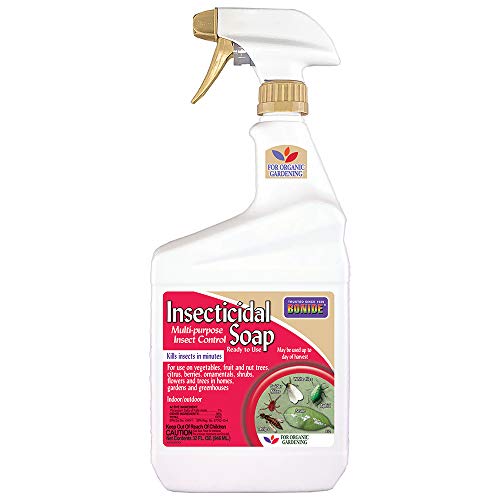
| Dense clusters of grey or green insects on stems and leaf undersides | Cabbage aphid and green peach aphid, which breed continuously in a greenhouse because there is no winter to reset them | Monitor with sticky traps from the start, squash small colonies by hand, use insecticidal soap, and reduce nitrogen. |
| Clouds of tiny white insects rising when the plant is disturbed | Whitefly, which a closed structure protects from weather and predators alike | Yellow sticky traps for monitoring, biological control with parasitic wasps, and a break in host continuity. |
| Large irregular holes with visible droppings | Caterpillars, from a moth that got in through an open vent | Fine mesh on vents, hand removal, and targeted biological products following the label. |
| Leaves become tough and bitter | Sustained heat above about 80 degF, or a plant left too long past maturity | Harvest younger, shade the house in summer, and grow kale into the cold months where it sweetens instead. |
| Yellowing lower leaves progressing upward | Nitrogen shortage in a leafy crop, or natural senescence of the oldest leaves | Feed during active growth and remove the oldest leaves, which is normal maintenance rather than a fault. |
| Stunted plants with swollen distorted roots | Clubroot, a soilborne brassica disease that persists for years | Do not replant brassicas in that bed. Grow in containers with fresh medium and raise the bed pH, which suppresses it. |
| Plant sends up a flower stem in spring | Bolting on lengthening days after overwintering, which is the normal end of the plant life | Expected. Harvest the flower shoots, which are excellent, then clear the plant and re-sow. |
| White powdery patches on upper leaf surfaces | Powdery mildew, which needs humid air but a dry leaf, and poor air movement | Increase air movement and avoid water stress, since stressed plants are far more susceptible. |
Which types work best under cover?
| Type | Suits | Note |
|---|---|---|
| Curly kale | General growing and winter standing | The classic type, very hardy, and the crinkled leaf gives aphids more places to hide under cover. |
| Lacinato or cavolo nero | Greenhouse growing specifically | Flat strap leaves are far easier to inspect and wash, which matters when aphids are the main problem. |
| Red and purple types | Colour and cold | Anthocyanin pigments intensify in cold, so the colour improves through winter along with the flavour. |
| Siberian and Russian types | The coldest conditions | Among the hardiest, with softer leaves that suit eating raw, and generally faster growing. |
| Baby leaf mixes | Small spaces and quick returns | Sown tight and cut at three to four weeks, which gives a far better return per square foot than full plants. |
| Dwarf varieties | Containers and low tunnels | Compact enough to fit under a low cover and to grow in a grow bag, which sidesteps the clubroot problem. |
The lacinato recommendation is a specifically greenhouse one. Curly kale is superb outdoors, but under cover its crinkled leaf is where aphids colonise and where they are hardest to see and hardest to wash out. Flat-leaved types make monitoring and cleaning far easier, which in a closed structure is worth more than the difference in flavour.
For a small greenhouse, baby leaf mixes sown tight and cut young are almost always the better use of the space than full-sized plants, because they return a harvest in three to four weeks from a fraction of the footprint.
Harvesting and what comes next
Harvest outer leaves from the bottom of the plant upward, leaving the growing point and the top rosette of leaves intact. Kale is a cut and come again crop by nature and a single plant produces for months this way.
Take no more than about a third of the leaves at once, and less in winter when regrowth is slow. A stripped plant in low light sits for weeks before producing again.
Harvest after cold for flavour. The sugar accumulation that follows a hard cold spell is real and noticeable, and it is the main reason to grow kale into winter rather than through summer.
When the plant bolts in spring, harvest the flowering shoots before the buds open. They are excellent, they are the last useful thing the plant produces, and taking them delays the plant collapse by a week or two. Then clear it, because a bolting brassica is an aphid nursery.
Equipment for growing kale under cover



Kale is hardy enough that a greenhouse is a convenience rather than a necessity, and it takes more floor space than almost anything else leafy. Grow it under cover for baby leaf, for winter harvesting in comfort, or where outdoor pest pressure is severe, and grow it outdoors under a cover when the greenhouse space could be earning more.