An unheated greenhouse in winter is not a warm place. On a cold clear night it will be a few degrees above outside, and by dawn it can be at outside temperature. What it reliably provides is shelter from wind and rain, protection from radiant frost, and a substantially warmer environment during daylight, and that combination is enough for a specific set of crops to produce right through the cold months.
What it cannot do is make a plant grow when there is not enough light. This is the single most important fact about winter growing and the one that determines the entire schedule.
The ten-hour rule
Below roughly ten hours of daylight, plant growth slows to almost nothing regardless of temperature. This is a widely used rule of thumb in season-extension growing, and the period it defines is often called the Persephone period after the myth.
The practical consequence is decisive. A crop sown too late does not grow slowly through winter; it sits at whatever size it reached and waits for the light to return. So the winter harvest is determined almost entirely by how big the plants got before the light went, and a sowing that misses the window by two weeks can miss the harvest entirely.
The window closes at different dates depending on latitude, and it is worth working out for your own location: the day length falls below ten hours much earlier at 48 degrees north than at 34. Aim to have plants at roughly three quarters of harvest size by the time it closes, which typically means sowing eight to ten weeks before. The frost date planting calculator handles the autumn side of the schedule as well as the spring one.
The crops that work
| Crop | Hardiness under cover | Harvest style | Notes |
|---|---|---|---|
| Mache, corn salad | Extremely hardy, survives hard freezing | Whole rosette | The single most reliable winter salad, and it tolerates being frozen solid and thawing |
| Claytonia, miner lettuce | Extremely hardy | Cut and come again | Productive in very low light and mild in flavour |
| Spinach | Very hardy | Outer leaves, repeatedly | The highest-yielding winter green, and it sweetens noticeably in cold |
| Kale | Very hardy | Outer leaves, repeatedly | Slow in deep winter, then grows away strongly in late winter |
| Chard and perpetual spinach | Hardy | Outer leaves, repeatedly | Less cold-tolerant than spinach but far more productive per plant |
| Mizuna, mustards, tatsoi | Hardy | Cut and come again | Fast growing and the best crops for filling gaps in the autumn window |
| Winter lettuce varieties | Moderately hardy | Outer leaves or whole head | Choose varieties described as winter or overwintering; summer types fail |
| Rocket and land cress | Hardy | Cut and come again | Strong flavoured in cold and among the fastest to regrow |
| Spring onion and hardy leeks | Hardy | Pull as needed | Not a salad crop, but they hold in the ground and add range |
| Parsley and chervil | Hardy | Cut sprigs | Herbs that genuinely produce in winter, unlike basil which does not |
Crops that do not work without heat are worth naming too, because the disappointment is common: tomatoes, peppers, cucumbers, beans, basil and courgette all need warmth and light in quantities an unheated winter greenhouse cannot provide. Attempting them is a lighting and heating project, discussed in heating a greenhouse in winter.
The double-cover method
The technique that most extends the range is adding a second layer inside the greenhouse: row cover over hoops directly above the crop. The greenhouse handles wind and rain and captures daytime heat, and the inner cover blocks radiant loss from the crop itself on clear nights.
Together they commonly hold a crop through nights 8 to 10 degrees Fahrenheit colder than the greenhouse alone would, which in practice is worth roughly a zone and a half of hardiness. A Agfabric Frost Blanket, 0.55 oz, 10 x 100 ft ($32.61) over Gardener's Supply Garden Hoops Grow Tunnel Support ($44.99) is the whole system, and it costs a fraction of running a heater for one night.
The daily routine matters. Cover at dusk, uncover on bright mornings, and leave covered through genuinely cold dull spells. Leaving the inner cover on continuously costs light that the crop cannot spare and holds humidity around the foliage overnight, which is exactly the condition described in humidity and disease control. The full detail on covers is in extending the season with row cover.
Watering in winter, which is where crops are lost
Winter demand is about a fifth of summer demand, and the most common way a winter greens bed fails is not frost, it is overwatering.
A cold, barely transpiring plant in a cool medium takes up very little water, and the medium dries slowly because evaporation is low. A watering schedule left on summer settings produces saturated soil, no oxygen at the root, and root rot. If a timer runs the bed, change the program for the season or turn it off and water by hand.
Water in the morning on a bright day so the foliage dries before dark, and water the medium rather than the leaves. Where a bed is on a drip line, a Flexon 5/8 in x 50 ft Weep and Soak Garden Soaker Hose ($14.99) or emitters under mulch keep water off the crop entirely. The seasonal figures are in the water use calculator.
Harvesting so the crop keeps producing
- Harvest outer leaves, not whole plants, on spinach, chard, kale and lettuce. The growing point survives and produces again, which in winter matters enormously because a replacement sowing will not grow.
- Cut and come again crops such as mizuna, rocket and claytonia should be cut an inch or so above the crown, leaving enough tissue to regrow.
- Harvest in the middle of the day, when leaves are turgid and not frozen. Frozen leaves handled will collapse when they thaw, so wait rather than picking at dawn.
- Expect regrowth to be slow in the darkest weeks and rapid from late winter. Plan the harvest rate around that: taking a third of a bed each week works in autumn and empties it by midwinter.
- Remove yellowing leaves as you go. Dead tissue in a cool humid house is where botrytis starts, and in winter there is no drying wind to help.
Thermal mass, which is free
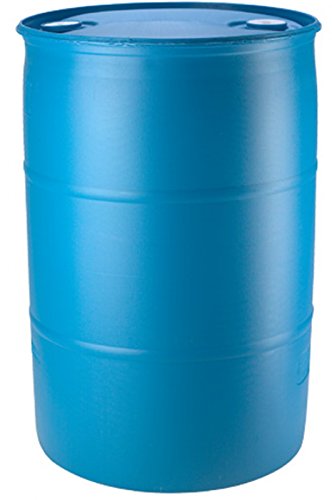
Because an unheated house has no heat input, anything that reduces the overnight fall is worth disproportionately more than it would be in a heated one. Water barrels along the north side, charged by day and releasing at night, typically lift the pre-dawn minimum by several degrees at no running cost, and the arithmetic is in passive solar and thermal mass.
A deep bed does the same job. Damp soil holds about 25 BTU per cubic foot per degree Fahrenheit, so a full bed is a substantial store in its own right, and it also keeps the root zone warmer than the air, which is where cold damage to hardy greens usually starts.
Winter greens equipment



A winter greens bed is also the easiest way to keep a greenhouse earning its floor space in the months it would otherwise sit empty, and it clears in time for spring propagation. The crossover is covered in the seed starting schedule.