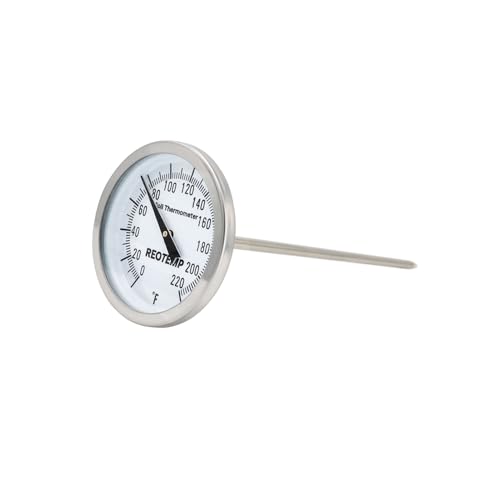
Germination responds to soil temperature, not air temperature, and the two can differ by 15 degrees Fahrenheit in the same room. A tray on a cold concrete floor in a 70 degree room can sit at 58 degrees in the media, which is below the minimum for tomato and far below the minimum for pepper. This is the most common reason a tray "does not come up" and the easiest to fix.
Every crop has three temperatures rather than one. The minimum is where germination becomes so slow that seed rots before it emerges. The optimum is where the percentage that germinates is highest and the time to emergence is shortest. The maximum is where germination falls off again, and for some crops there is an additional thermal dormancy above it, where seed actively refuses to germinate rather than merely germinating slowly.
| Crop | Minimum | Optimum | Maximum | Days at optimum | Days at 60 degF |
|---|---|---|---|---|---|
| Tomato | 50 | 75 to 85 | 95 | 6 | 14 |
| Pepper | 60 | 80 to 85 | 95 | 8 | 25 |
| Eggplant | 60 | 75 to 85 | 95 | 7 | 20 |
| Cucumber | 60 | 85 to 95 | 105 | 3 | 13 |
| Melon | 60 | 85 to 90 | 100 | 4 | No reliable germination |
| Summer squash | 60 | 85 to 95 | 100 | 4 | 12 |
| Green bean | 60 | 75 to 85 | 95 | 5 | 16 |
| Pea | 40 | 65 to 75 | 85 | 7 | 9 |
| Lettuce | 35 | 70 to 75 | 80 | 3 | 4 |
| Spinach | 35 | 65 to 70 | 75 | 5 | 6 |
| Kale | 40 | 70 to 75 | 85 | 5 | 6 |
| Swiss chard | 40 | 80 to 85 | 95 | 5 | 9 |
| Arugula | 40 | 65 to 70 | 75 | 4 | 5 |
| Bok choy | 45 | 70 to 75 | 85 | 4 | 6 |
| Cabbage | 40 | 70 to 80 | 90 | 5 | 7 |
| Broccoli | 40 | 70 to 80 | 90 | 5 | 7 |
| Radish | 40 | 75 to 85 | 95 | 4 | 6 |
| Carrot | 40 | 75 to 85 | 95 | 6 | 12 |
| Beet | 40 | 75 to 85 | 95 | 5 | 10 |
| Onion and scallion | 35 | 70 to 75 | 85 | 7 | 10 |
| Basil | 60 | 75 to 85 | 95 | 5 | 15 |
| Cilantro | 45 | 65 to 70 | 75 | 7 | 9 |
| Parsley | 45 | 70 to 75 | 85 | 14 | 20 |
| Marigold | 60 | 75 to 80 | 90 | 5 | 12 |
| Petunia | 60 | 75 to 80 | 85 | 7 | 16 |
| Geranium | 65 | 70 to 75 | 80 | 7 | 18 |
The lettuce trap, and why an unregulated heat mat is a mistake
Read the lettuce row carefully. Its optimum is 70 to 75 degrees Fahrenheit and its maximum is 80. Above roughly 80 degrees lettuce seed enters thermal dormancy, an active physiological block rather than a slowdown, and it will simply not germinate until the temperature falls. An unregulated seedling heat mat typically holds media 10 to 20 degrees above room temperature, which in a 70 degree room puts the tray at 80 to 90. Used under lettuce, spinach, arugula or cilantro, that mat prevents germination rather than assisting it.
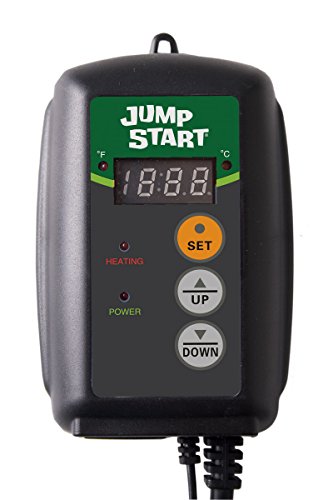
This is the reason a probe thermostat is not an accessory but a requirement. A VIVOSUN 10 x 20.75 in Seedling Heat Mat and Digital Thermostat Set holds the media at a set figure rather than simply running warm, and a standalone controller such as the Hydrofarm Jump Start MTPRTC Digital Heat Mat Thermostat does the same for mats you already own. Set it to 80 for peppers, 75 for tomatoes, and turn the mat off entirely for the cool-season crops in the bottom half of the chart.
Turning the mat off is as important as turning it on
Bottom heat is a germination tool, not a growing tool. Once a tray has germinated, the mat should come off within one to three days. Seedlings held at 80 degrees Fahrenheit in the root zone after emergence stretch: the stem elongates faster than the plant can thicken it, and the result is a tall, weak transplant that falls over and never fully recovers.
The correct sequence is warm to germinate, then noticeably cooler to grow. For tomatoes, germinate at 78 to 80 degrees, then hold 65 to 70 in the day and 60 to 62 at night. For peppers, germinate at 82, then hold 70 to 75 day and 65 night. The night drop is not a compromise, it is deliberate: a moderate day to night differential produces shorter, sturdier transplants than a constant temperature, which is a technique commercial propagators use on purpose.
| Crop group | Germinate at | Then grow day at | Then grow night at | Mat off after |
|---|---|---|---|---|
| Peppers and eggplant | 80 to 85 degF | 70 to 75 degF | 65 degF | 2 days from emergence |
| Tomatoes | 75 to 80 degF | 65 to 70 degF | 60 to 62 degF | 2 days from emergence |
| Cucumbers, melons, squash | 85 to 90 degF | 70 to 75 degF | 65 degF | 1 day from emergence |
| Basil | 75 to 85 degF | 70 degF | 65 degF | 2 days from emergence |
| Brassicas: kale, cabbage, broccoli | 70 to 75 degF | 60 to 65 degF | 55 degF | Immediately |
| Lettuce and salad greens | 70 degF, no mat | 55 to 65 degF | 50 to 55 degF | Never use one |
| Onions and scallions | 70 to 75 degF | 60 to 65 degF | 55 degF | 3 days from emergence |
| Bedding flowers | 75 to 80 degF | 62 to 68 degF | 58 degF | 2 days from emergence |
Testing old seed before you commit a tray
Seed viability falls with age, and it falls at very different rates by species. Onion, parsnip and parsley are effectively one-season seeds. Tomato, pepper and brassicas hold four to five years in cool dry storage. Before committing a tray, three weeks and bench space to old seed, run a germination test: blotter sheets or a damp paper towel in a bag at the crop optimum temperature, 20 seeds, counted at the expected days to emergence. If 12 of 20 come up you have a 60 percent rate and you should sow proportionally thicker.
Hitting the temperatures in the chart


Build the sowing calendar these temperatures feed into with the frost date sowing calculator, see the equipment picks in best seedling heat mats and best seed starting trays, and read the full method in building a sowing schedule.