Skip to content
GreenhouseSetup
Menu

The best cold frames, in three tiers

The short answer

For most growers the best cold frame is the Outsunny 39 x 26 in wooden frame at roughly $95: a rigid timber box with a hinged polycarbonate lid that holds two 1020 flats and stays put in wind. Step up to the Juwel Year-Round frame if the site is exposed or you want adjustable lid stays, and down to a 4-tier zip-cover unit only if the frame will live on a sheltered balcony.

Typical night gain
7 to 10 F
Frames compared
6
Price range
$37 to $200
Power needed
None

Researched from published specifications and verified owner reviews · Updated 2026-08-16

A cold frame is the highest return per dollar in season extension, and it is the piece of equipment most often bought in the wrong form. The job is to trap a real volume of air under a rigid, transparent lid that you can open. Everything that follows from that, the insulation gain, the wind survival, the ability to harden off transplants, depends on rigidity, and rigidity is exactly what the cheapest units on the market do not have.

The pick for most growers is the Outsunny 39 by 26 inch wooden cold frame at around $63.53, because a timber box with a hinged twin-wall lid does the whole job without any of the failure modes that shorten the life of a zip-cover shelving unit.

Best for most growers

Outsunny Wooden Cold Frame, 39 x 26 in

Outsunny

Outsunny Wooden Cold Frame, 39 x 26 in

A 39 by 26 inch timber frame with a hinged polycarbonate lid, sized to hold two 1020 flats or a solid block of overwintering greens. It wins on the two properties that decide whether a frame is still working in year three: the box is rigid enough not to rack, and the lid is hinged rather than draped, so it can be propped at any angle on a warm morning and closed properly on a cold night. Timber also gives a slightly better frame R-value than aluminum and takes a screw anywhere you want one.

Check price on Amazon $63.53 at the time of writing

If that is unavailable

Juwel Year-Round Cold Frame ($200.31). A larger twin-wall frame with a proper aluminum section and adjustable lid stays, which is the upgrade worth making on an exposed site or if you intend to overwinter crops rather than only start seed.

What a cold frame actually does

The honest figure is 7 to 10 degrees F above ambient overnight on a clear night, and considerably more under cloud. That is a smaller number than most people expect and a more useful one than it sounds, because in a typical temperate garden it converts a hard frost into a light one and moves the effective start and end of the hardy-crop season by roughly six weeks at each end.

It is worth understanding where that heat comes from, because it explains every design decision below. During the day the frame admits shortwave solar radiation, which is absorbed by the soil and the mass inside. At night that mass re-radiates as longwave infrared, which glazing does not transmit well, so the energy is trapped. The frame also blocks convective loss by stopping wind from stripping heat off the soil surface, and that second mechanism is often the larger one.

Two consequences follow. First, a frame sitting on bare soil substantially outperforms one on a deck or paving, because the soil is the storage medium. Second, a frame that is not sealed at the base loses the convective benefit entirely. Both matter more than the glazing specification.

Figure 1. Overnight temperature gain by structure type · 6 rows
Figure 1. Overnight temperature gain by structure type
StructureTypical gain over ambientBest suited to
Single layer row cover on hoops, 0.5 oz 2 to 4 F Frost dodging in shoulder seasons
Heavy row cover on hoops, 1.2 oz 6 to 8 F Extending harvest of hardy greens
Rigid cold frame, twin-wall lid 7 to 10 F Overwintering greens, hardening off
Cold frame inside a low tunnel 12 to 16 F Winter salad in cold zones
Unheated polycarbonate greenhouse 8 to 12 F Standing headroom, larger volume
Heated greenhouse at a set minimum Whatever you pay for Year-round production
Figures are researched typical values for still, clear nights and vary substantially with cloud cover, wind, soil moisture and thermal mass inside the structure. Cloudy nights consistently show larger gains than clear ones because radiative loss to a clear sky is the dominant mechanism.

The three tiers

Cold frames in three tiers

3 tiers · priced at the time of writing

Beginner

A balcony, a patio or a sheltered corner, where the job is holding seed flats rather than overwintering a crop.

TianC 4-Tier Mini Greenhouse

TianC beauty

TianC 4-Tier Mini Greenhouse

$36.99

Four shelves under a zip cover for the price of a couple of flats of seedlings. It is genuinely useful as a hardening-off station and as somewhere to keep trays out of heavy rain, and it stores flat when not in use. At this price the question is not whether it competes with a rigid frame, it is whether the alternative is nothing at all.

The trade-off: It is a cover, not a frame. It will move in wind unless tied to something solid, the zip is the first thing to fail, and the shelves put your crops above the soil, which removes the thermal mass that makes a cold frame work. Do not expect meaningful overnight insulation from it.

Check price

Buy once

A gardener who wants a frame that is still in service in five years and sits on soil in the open garden.

Outsunny Wooden Cold Frame, 39 x 26 in

Outsunny

Outsunny Wooden Cold Frame, 39 x 26 in

$63.53

Rigid timber sides, a hinged twin-wall lid and a footprint sized to two 1020 flats. The rigidity is what you are paying for: the box holds its shape, the lid seals against it, and it can be propped at any angle without a mechanism. Sitting directly on soil, it gets the full thermal mass benefit that shelf units cannot.

The trade-off: Timber needs occasional treatment and will eventually rot at the ground contact if it sits in standing water. There are no lid stays, so propping is a matter of a stick or a brick, which is fine but is a manual operation you have to remember on a sunny morning.

Check price

Expert

A grower overwintering crops seriously, on an exposed site, who wants the frame to manage itself.

Juwel Bio Protect 2000 Bed-System Cold Frame

JUWEL

Juwel Bio Protect 2000 Bed-System Cold Frame

$540.53

A proper aluminum section with twin-wall glazing and engineered lid stays, which is a different class of object from a timber box. The stays hold the lid at set positions in wind rather than letting it slam, the glazing is a real insulating panel rather than a single sheet, and the frame geometry is designed to shed snow. This is the tier at which a frame stops needing supervision.

The trade-off: It costs several times the timber frame for an insulation gain of a degree or two. What you are actually buying is mechanical reliability and wind survival, so if the site is sheltered and you are around to prop and close the lid, the middle tier does the same growing.

Check price

Lid mechanics decide more than glazing does

Almost every cold frame comparison focuses on the glazing, and almost every cold frame failure is a lid problem. Three specific ones recur in owner reports.

The lid slams. A hinged lid propped open with a stick is fine until a gust catches it. A twin-wall panel dropping onto a timber frame from a foot up breaks the panel or the hinge, and it does it on the windy day when you were not there. Frames with engineered stays, or a lid you can latch at a set opening, remove this entirely. On a frame without stays, a simple fix is a length of chain between lid and frame, set to the maximum opening you want.

The lid does not seal. A gap between lid and frame is a chimney: warm air leaves the top and cold air is drawn in at the base, which converts an insulating box into a wind-sheltered one and costs several degrees. Check the lid sits flat all the way round on delivery, and shim the frame rather than the lid if it does not, because an unlevel base is almost always the cause.

The lid is too heavy to prop casually. This sounds trivial and is the most consequential of the three, because venting is a daily operation in spring. A lid you resent lifting is a lid that stays closed on the morning you should have opened it, and cooking is a far more common cause of crop loss in a cold frame than freezing. Weight matters more than insulation here.

Watch out

The sunny spring day is the real hazard

A closed cold frame in direct spring sun readily exceeds 100 degrees F while the outside air is in the fifties. The frame does not know what month it is. Crops are lost to overheating far more often than to cold, and always on the pleasant day when the grower went out. Prop the lid on any sunny day above roughly 45 degrees F outside, and if the frame is out of sight of the house, fit an automatic opener. Wax cylinder openers sized for frames, like the GDHSWJ unit, need no power at all and are the cheapest insurance available on this whole category.

Siting: three things, in this order

Placement affects an unheated frame more than any purchase decision, because everything an unheated frame achieves comes from the sun.

Winter sun angle first. The sun sits far lower in winter than intuition suggests, and a fence or hedge that casts no shadow in summer can shade a frame for the whole useful part of a winter day. Look at where shadows fall at midday in the coldest part of the year rather than when you are making the decision. A frame against a south-facing masonry wall gets both direct sun and the heat the wall gives back after dark, which is a genuine and significant effect.

Drainage second. Wet soil conducts heat away roughly twenty times faster than dry soil, so a frame sitting in a puddle loses far more heat than one on free-draining ground. More importantly, the crops most worth overwintering are killed by wet at the crown more often than by cold. Set the frame on a slight rise or a bed of gravel.

Access third, and it is not a minor consideration. A frame you have to cross wet grass to reach in the dark does not get vented on the warm day or closed on the cold night, which are the two operations the frame exists for. Put it somewhere you walk past. The full treatment is in siting and orientation.

How we chose

We did not assemble these frames ourselves, and any site claiming hands-on testing of six cold frames across multiple winters is telling you a story. What we compared instead was published construction specification, glazing type and thickness where the maker states it, lid mechanism and whether stays are included, base dimensions against the standard 1020 flat footprint, and verified owner reviews weighted heavily toward reports from the second and third season.

That weighting matters in this category more than most. A cold frame reads well in its first month regardless of quality, because assembly and first impressions dominate early reviews. The things that decide whether it was worth buying, timber rotting at ground contact, hinges pulling out, zips failing, panels going brittle, glazing clouding, all surface between month twelve and month thirty-six.

We also excluded anything where the maker does not state glazing material. A listing that says only "transparent cover" is usually thin PVC film, which yellows within a season, embrittles in cold and tears at the first stress point. That is a different product from a polycarbonate lid regardless of how similar the photographs look.

What to put in a cold frame, month by month

A frame that is empty half the year is a frame doing half its job. The useful sequence across a full year runs roughly as follows.

In late winter and early spring the frame is a hardening-off station. Transplants raised under lights indoors are soft, and moving them straight to open ground checks them badly through wind and UV exposure. Two weeks in the frame with the lid progressively propped further open is the whole process, covered in hardening off seedlings.

Through late spring and summer, the frame should be open or empty. A closed, empty frame in high summer reaches temperatures that degrade polycarbonate faster than anything else it will experience, and timber dries and splits. Prop the lid fully or take it off entirely.

Late summer is the moment the whole category earns its keep, and the moment most growers miss. Winter crops have to be sown while day length and warmth are still sufficient to grow them to harvestable size, because they will not size up in the cold. The frame then holds them rather than grows them. Missing that window by three weeks is the difference between harvesting salad through winter and looking at seedlings that never got there. Timing crop by crop is in winter greens in an unheated greenhouse.

Through winter the frame is storage rather than production. Kale, spinach, chard, mache, arugula, winter lettuce and most Asian brassicas hold well. Water sparingly and only on mild mornings, because wet foliage going into a freezing night is the main cause of loss.

The accessories that make a frame work

What to buy alongside the frame

A cold frame is a box. These four items are what turn it into a working piece of season-extension equipment, and all four are routinely bought a season later than they should have been.

  • GDHSWJ Solar Automatic Greenhouse Vent Opener

    Automatic venting

    GDHSWJ Solar Automatic Greenhouse Vent Opener

    $26.99

    A wax cylinder opener lifts the lid as the frame warms and lowers it as it cools, with no power and nothing to fail electronically. It removes the single most common cause of crop loss in this category.

  • Brannan Digital Max-Min Greenhouse Thermometer

    Measurement

    Brannan Digital Max-Min Greenhouse Thermometer

    $13.95

    A max-min thermometer tells you what the frame did at 3 am and at 2 pm. Without those two numbers you are managing the frame from guesses about weather you did not observe.

  • AlpineReach Frost and Sun Plant Cover, 10 x 30 ft

    Extra insulation

    AlpineReach Frost and Sun Plant Cover, 10 x 30 ft

    $22.99

    Row cover laid directly over the crop inside the frame adds a second layer and is worth another few degrees on the coldest nights. Two layers of cheap protection beat one expensive one.

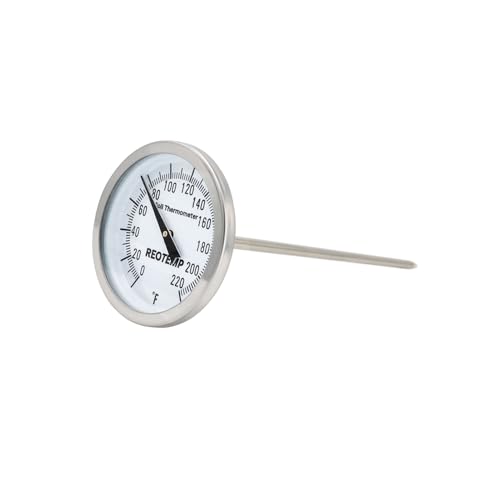
  • REOTEMP K82 Soil Thermometer, 5 in Stem

    Soil temperature

    REOTEMP K82 Soil Thermometer, 5 in Stem

    $12.99

    Germination responds to soil temperature rather than air temperature, and a frame in late winter is usually colder at the soil than the air reading suggests. This is the number that tells you whether direct sowing is worth attempting.

Building versus buying

A cold frame is one of the few pieces of greenhouse equipment that is genuinely straightforward to build, and it is worth being clear about when that is the better answer.

Building wins when you want a specific size, when you already have timber, and when you want the frame taller at the back than the front, which is the classic geometry and is meaningfully better than a flat lid because it faces the glazing toward the low winter sun. A slope of roughly 15 to 20 degrees toward the south is the traditional figure and it is a real optimization rather than a stylistic one.

Buying wins on the lid. Sourcing a twin-wall panel, cutting it without cracking it, sealing the flutes and hinging it to a frame is the part of a home build that most often produces a disappointing result, and a bought frame arrives with that problem solved. If you build, budget for a proper polycarbonate panel with taped flutes rather than glazing with an old window, because single-pane glass has roughly half the R-value and breaks into the crop.

Field tip

Sink the frame, do not just set it down

Setting a cold frame two to four inches into the soil rather than resting it on the surface does two useful things at once. It seals the base against the convective loss that costs several degrees, and it puts the crop root zone below grade where soil temperature is more stable. It also stops the frame from being a wind-catching box sitting on top of the ground. This single detail is worth more than most of the specification differences between frames.

Who should skip a cold frame

Two groups. If your goal is starting transplants and nothing else, an indoor light rack does that job better, faster and more reliably, because seedlings need consistent warmth and 14 to 16 hours of light that no unheated outdoor structure supplies in late winter. The beginner build includes both for exactly this reason.

If you want maximum ground under cover for the money and you grow in-ground rather than in flats, a low tunnel gives three to five times the covered square footage per dollar. It insulates worse and it needs managing in wind, but for extending a vegetable garden's shoulders across a whole bed, the economics are not close. See the tunnel kit picks and hoop house versus greenhouse.

Related on this site

Common questions

6 answers

+ How much warmer is a cold frame than outside?

Roughly 7 to 10 degrees F above ambient overnight on a clear night, and more under cloud, because radiative loss to a clear sky is the dominant mechanism. Daytime is the opposite problem: a closed frame in spring sun readily exceeds 100 degrees F while outside air is in the fifties, so venting on sunny days matters more than insulation on cold nights.

+ What can I grow in a cold frame in winter?

Hardy leaves rather than fruiting crops. Kale, spinach, chard, mache, arugula, winter lettuce, mustards and most Asian brassicas hold through a considerable part of winter in zone 6 and warmer. The critical constraint is that they must be sown in late summer and grown close to harvestable size before cold arrives. A cold frame holds crops through winter, it does not grow them through winter.

+ Do cold frames need ventilation?

Yes, and daily in spring. A closed frame in sun overheats within an hour, and cooking kills more cold frame crops than freezing does. Prop the lid on any sunny day above roughly 45 degrees F outside. If the frame is out of sight from the house, a wax cylinder automatic opener needs no power and removes the failure mode entirely.

+ Should a cold frame sit on soil or on paving?

On soil, and ideally sunk two to four inches into it. The soil is the thermal mass that stores daytime heat and re-radiates it overnight, which is where most of the insulating benefit comes from. A frame on paving or decking loses that storage, and one resting on the surface rather than sunk into it also loses several degrees to air movement under the base.

+ Which way should a cold frame face?

Glazing toward the south in the northern hemisphere, ideally with the lid sloped 15 to 20 degrees so it faces the low winter sun more directly. Site it clear of anything that casts a midday shadow in the coldest part of the year, which is a far longer shadow than the same object casts in summer. A position against a south-facing masonry wall gains again from heat the wall re-radiates after dark.

+ How long does a cold frame last?

A timber frame with a polycarbonate lid typically gives five to ten years, with ground contact rot and hinge failure as the usual end points rather than the glazing. Aluminum frames last longer. Polycarbonate glazing with a co-extruded UV layer holds its transmission for 10 to 15 years; thin PVC film covers on budget units generally yellow and embrittle within one or two seasons.

Working out the figures for your own house and season? The Greenhouse Build & Growing Planner is the paid version of these pages: 8 printable worksheets you fill in with your own numbers, plus the full PDF, $29.