A greenhouse is the one big gift in this hobby: the purchase that turns "we should grow more" into a season that starts in late winter and runs past the first frost. It is also the gift most often bought wrong, because the catalogue is sorted by brand and square footage and the decision is actually about who is growing, where, and in what climate. This finder works through those three questions in order, then matches each answer to one of eight structures, most of which have their own review on this site. Prices sit in the cards only, because they move through the holiday quarter.
Who are you buying for?
Three levels, and each points at a different structure. The curious grower starts a few trays on a windowsill, has said the garden could start earlier, and might not use a greenhouse every week; buy them the cheapest structure that genuinely protects a crop and let them prove the habit. The committed beginner has asked for a greenhouse by name, or has been running a zip-cover mini greenhouse for a year and losing seedlings to it; buy them the house they will keep. The experienced grower already has a small house and has run into its limits, which are always the same two: bench space and winter heat. The siting guide walks through the decisions in the order they actually get made, site first, then size, then glazing.
| They are | They have | Give |
|---|---|---|
| Curious, hardening off trays each spring | A bed or a patio | Backyard Discovery Aggie cold frame |
| Curious, a small town garden | One good bed, no room to stand | Juwel Bio Protect 2000 |
| Committed, a small or medium yard | A 7 by 7 level pad | Palram Canopia Mythos 6 x 6 |
| Committed, a medium yard | A 7 by 11 level pad | Palram Canopia Hybrid 6 x 10 |
| Committed, a fixed budget and shelter | An 11 by 13 sheltered pad | 10 x 12 polycarbonate with roof vent |
| Experienced, feeds a family | An 11 by 19 pad and power | 10 x 18 aluminum walk-in |
| Any level, a visible plot | A place it will be seen | Palram Canopia Oasis Hex 7 x 8 |
| Any level, an allotment or big plot | A 26 by 11 strip of ground | Quictent 25 x 10 tunnel |
Question one: how much room do they have?
This is the fork that eliminates half the catalogue, and it has nothing to do with budget. A walk-in greenhouse needs a level pad a foot larger than its footprint on every side, room to walk round it for cleaning and re-glazing, and a position that is not under a tree, not in the wind shadow of a fence that will funnel gusts at it, and not below a roof that sheds snow. If the recipient has that, the choice is between the Mythos 6 by 6 and the Hybrid 6 by 10 , and the answer is usually the larger one: the greenhouse size calculator shows that a 6 by 6 with a bench and a path leaves roughly 8 to 10 square feet of growing space, and footprint is the most consistent regret owners report.
If they do not have that, the structures that fit a small garden are not compromises, they are different tools. The Juwel Bio Protect sits over a bed and overwinters a crop in it; the Aggie cold frame hardens off a season of trays on a patio. The cold frame versus mini greenhouse comparison and the cold frame roundup cover the smaller options in depth. And if they have a lot of ground and no interest in a building, the Quictent tunnel covers 250 square feet for the least money on this page; the hoop house versus greenhouse comparison is honest about what a film cover gives up.
Question two: what is the climate like?
Glazing and frame decide whether the structure survives, and the climate decides how much of each is needed. In a mild, sheltered location almost any kit here lasts, and the 10 by 12 is the most greenhouse for the money. In a windy or snowy location, only buy a kit with a published rating: the Oasis Hex states 55 mph, and the Palram range generally publishes snow load figures where the no-name kits do not. The snow and wind load chart lists what each maker states, and the load guide explains what the numbers mean for a given site.
Winter heat is the other climate question. Twin-wall polycarbonate loses roughly 40 percent less heat than glass through the same area, which is why every walk-in here uses it; the polycarbonate versus glass comparison and the glazing heat loss calculator put figures on it. But no unheated house holds a frost-free minimum through a real winter, and if the recipient intends to grow through it the gift needs a heater. A 6 by 8 twin-wall house loses about 7,800 BTU per hour at a 40 degree F differential, which a 1500 W Bio Green Palma just covers on a standard outlet; the heater BTU calculator does the sum for any structure on this page, and the winter heating guide covers insulation and thermal mass for the houses too big for a single heater.
| Structure | Glazed area | Heat loss | Heater |
|---|---|---|---|
| Mythos 6 x 6 | ~250 sq ft | ~6,500 BTU/h | One 1500 W |
| Hybrid 6 x 10 | ~350 sq ft | ~9,100 BTU/h | One 1500 W, lower target, or 240 V |
| 10 x 12 | ~500 sq ft | ~13,000 BTU/h | 240 V or propane |
| 10 x 18 | ~680 sq ft | ~17,700 BTU/h | 240 V or propane |
| Quictent 25 x 10 tunnel | ~700 sq ft film | ~35,000 BTU/h | Not practical, unheated growing |
Question three: what do they grow?
The crop decides the light and the height. A grower of tomatoes, peppers and cucumbers needs headroom for a plant trained to six feet and as much light as the glazing will pass, which favours the clear-roofed Hybrid and the tall walk-ins over a cold frame; the tomato page and the cucumber page give the temperatures and spacing. A grower of winter greens needs insulation more than light and a structure that can be double-covered inside, which is what the twin-wall houses and the Juwel do well; the winter greens guide explains the method and the kale page is the crop to start with. A grower of seedlings for the garden mostly needs a place to harden off, which is the cold frame's whole job, and the seed-starting schedule shows how many trays that involves. An ornamental grower is the one recipient for whom the Oasis Hex is the obvious answer, and the orchid page is the reason.
Which structure fits which recipient?
Eight structures, each matched to a level, a space and a climate. The badge on each card says who it is for; most have a full review on this site linked from the gear section, and the walk-in kit roundup ranks the same houses in three tiers with the trade-offs named. The aluminum versus wood frame comparison covers the one material choice not represented here.
The eight structures
- around $1,600

Palram Canopia Oasis Hex 7 x 8 Greenhouse
Check price on Amazon - around $760

10 x 18 ft Aluminum Walk-In Polycarbonate Greenhouse
Check price on Amazon - around $714

Palram Canopia Hybrid 6 x 10 Greenhouse
Check price on Amazon - around $622

Palram Canopia Mythos 6 x 6 Greenhouse
Check price on Amazon - around $600

10 x 12 ft Polycarbonate Greenhouse with Roof Vent
Check price on Amazon - around $541

Juwel Bio Protect 2000 Bed-System Cold Frame
Check price on Amazon - around $349

Backyard Discovery Aggie 4 x 2 Cedar Cold Frame
Check price on Amazon - around $285
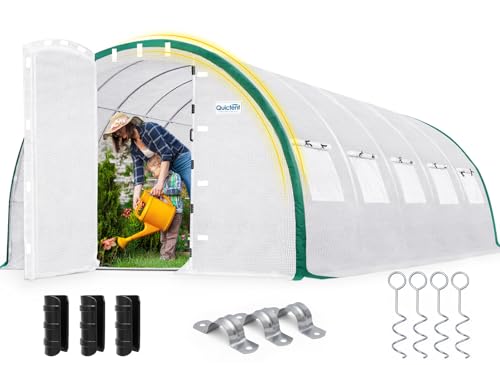
Quictent 25 x 10 ft Walk-In Tunnel Greenhouse
Check price on Amazon
What do they need alongside the greenhouse?
Four things that no kit ships with, and together they cost between $80 and $250 depending on whether a heater is included. First, anchoring , because kit pegs are inadequate in wind and frame racking from an unanchored base is the most common cause of panels popping out in the first winter; the anchoring guide covers screw anchors and timber bases. Second, an automatic vent opener , because a closed house on a sunny morning cooks a crop and most kits ship with too little vent area to begin with; the ventilation guide has the vent area rule. Third, a logging thermometer , so the recipient knows what the house did overnight. Fourth, a heater from the table above if they intend to grow through winter. Everything else on the under $50 gift page can wait until they know what they are missing, and the complete builds show a whole setup at three budgets if the gift is going to grow into one.
What should you check before ordering?
The pad. Measure the spot without explaining why: a 6 by 6 wants a level area about 7 by 7, a 6 by 10 about 7 by 11, and the 10 by 18 about 11 by 19, all with room to walk round. Exposure. If the site is windy or in a snow zone, buy a kit with a published rating and budget for anchoring. Power. If they will heat it, check for an outdoor GFCI outlet within reach, and read the heater table before assuming a plug-in heater will do. Delivery. A 10 by 18 kit arrives on a pallet; check the recipient can receive freight. Returns. Greenhouses are large and heavy to ship back, so confirm the return window covers the holiday period. Availability. Two well-regarded structures, the Palram EcoGrow and the Juwel year-round cold frame, were out of stock when this guide was written and were left out for that reason; the EcoGrow review is still worth reading if the recipient's winters are hard and it comes back into stock.
Last thing: the structure is the start, not the finish. If the person you are buying for ends up with leggy seedlings, bolting lettuce or a house that swings from freezing to 100 F in a day, the ventilation guide and the frost date sowing calculator fix most of it for free. Send them the links with the gift.